
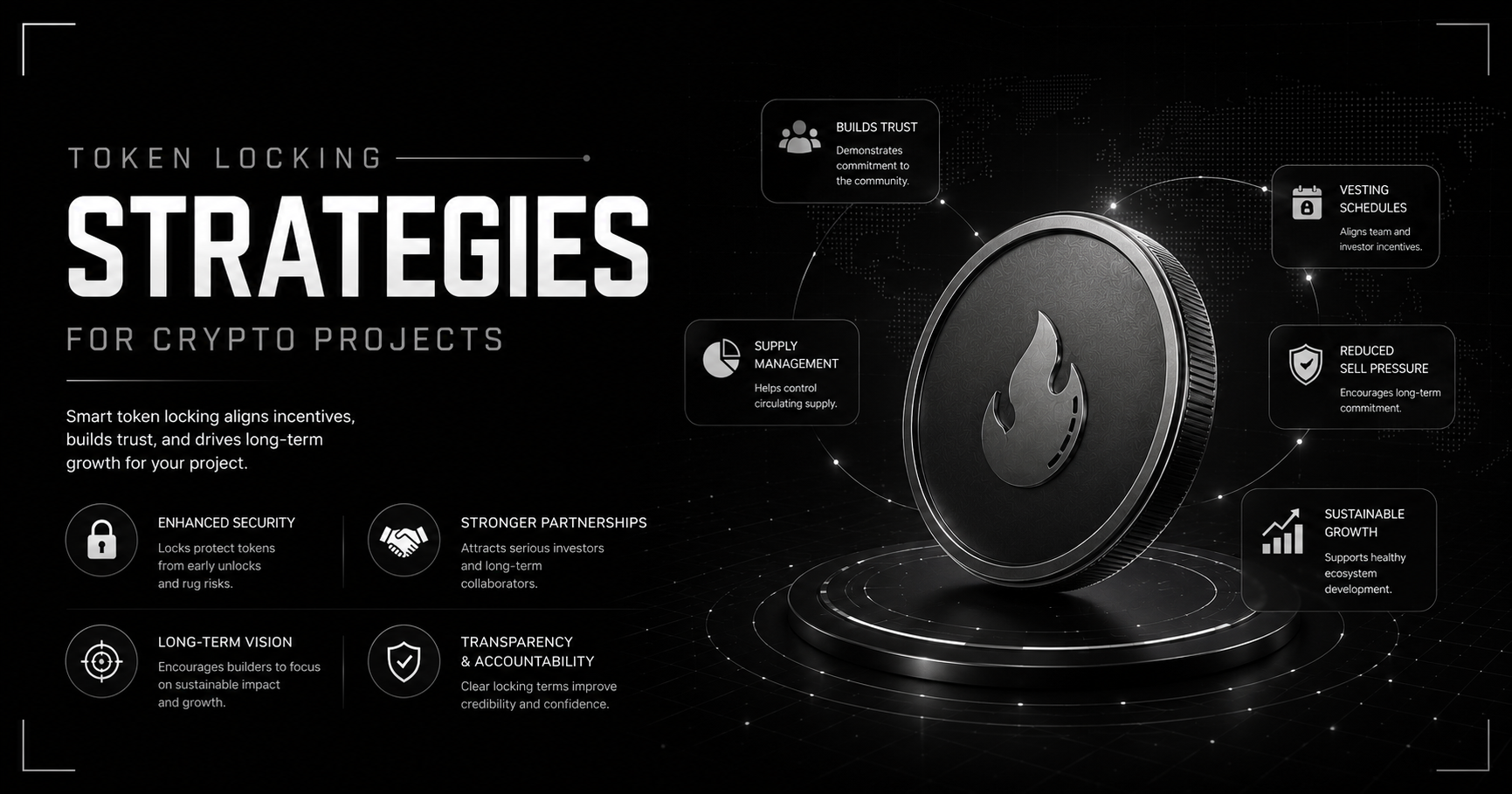
Token locking strategies are pivotal in establishing trust and stability within the rapidly evolving crypto ecosystem. With new projects launching regularly, the importance of securing tokens through effective locking mechanisms cannot be overstated. Effective token locking is not just a safeguard; it serves as a foundational pillar for building investor confidence and long-term project viability. In this article, we’ll explore multiple approaches to token locking and how Devflation's tools help teams implement these strategies effectively.
Understanding Token Locking
Token locking refers to the process of restricting access to a specific amount of tokens for a predetermined period. This serves various purposes, including preventing market manipulation, ensuring project team commitment, and building investor confidence. In an environment where volatility is the norm, these strategies can reinforce community trust. Projects that neglect token locking often find themselves grappling with market instability.
Key Benefits of Token Locking
- Market Stability: By locking tokens, projects can mitigate sudden sell-offs that could destabilize the market.
- Long-term Commitment: Locking tokens reinforces the project team's dedication to the project's success over time.
- Investor Confidence: It signals to investors that the team has a vested interest in the project, encouraging more substantial investments.
Common Token Locking Strategies
There are several common approaches to token locking, each tailored to meet specific objectives and mechanisms.
1. Time-Based Locks
Time-based locks involve locking tokens for a specified duration. This is most commonly used in Initial Coin Offerings (ICOs) or token sales. The tokens remain inaccessible until the lock period expires. This strategy can prevent early investors from quickly cashing out, which could lead to price volatility and undermine project integrity.
Takeaway
While time-based locks can provide immediate stability, they may not offer the flexibility needed as project dynamics evolve. Teams should consider setting a lock period that aligns with their roadmap and market conditions.
2. Vesting Schedules
Vesting schedules are a more nuanced approach, often used to release tokens gradually over time. This method ensures that team members, advisors, or early investors do not dump their tokens all at once, which could flood the market and devalue the token.
Example
A common strategy might involve releasing 25% of locked tokens after one year, followed by quarterly releases for the next three years. For instance, a project may tie these releases to specific milestones like product launches or user growth targets. This approach aligns the interests of team members with the long-term success of the project, fostering a shared vision.
Practical Consideration
Vesting schedules should be transparent and communicated clearly to the community to build trust. Lack of clarity can lead to skepticism and diminish investor confidence.
3. Multi-signature Locks
Multi-signature (multisig) contracts require multiple signatures to release tokens. This is particularly useful for funds held in a treasury or for governance tokens. By requiring consensus among multiple parties, this strategy provides an added layer of security and accountability.
Pros and Cons
- Pros: Reduces the risk of misuse by any single party, thereby enhancing security and community trust. Projects using multisig for governance can demonstrate a commitment to decentralization.
- Cons: Slower release processes can hinder quick decision-making when urgent action is needed. Teams must balance security with the need for agility in a fast-moving market.
4. Dynamic Locking Mechanisms
Some projects have started experimenting with dynamic locking mechanisms. These allow tokens to be locked or unlocked based on specific performance metrics, such as the achievement of milestones or network activity. For example, if a project meets its development goals, a portion of the tokens may be released to stakeholders as a reward, effectively tying token access to project performance.
Consideration
While this approach can incentivize performance, it requires robust tracking and reporting mechanisms to maintain transparency. Projects must ensure that all stakeholders are aligned on what metrics trigger changes in token status.
How Devflation Addresses Token Locking Challenges
At Devflation, we provide tools that simplify the implementation of various token locking strategies. Our platform enables project teams to set up token locks, vesting schedules, and multisig contracts without needing extensive coding knowledge. Here’s how we stand out:
User-Friendly Interface
Our dashboard is designed to be intuitive, allowing teams to easily configure their locking strategies. Instead of navigating complex smart contracts, teams can use our streamlined options to tailor their locking mechanisms to their specific needs. A user-friendly interface can significantly reduce onboarding time for new projects.
Transparency and Security
All token locking actions executed through our platform are recorded on-chain, ensuring full transparency. This on-chain proof builds confidence among stakeholders that the locking mechanisms are indeed in place and functioning as intended. Projects that prioritize transparency often find higher levels of community engagement.
Flexibility for Future Adjustments
We understand that project needs can evolve. Our tools allow teams to modify their locking strategies as necessary while maintaining clear communication with their community. This adaptability can be crucial in a rapidly changing market, where rigid strategies may hinder responsiveness to new challenges.
Real-Life Applications of Token Locking Strategies
To illustrate the effectiveness of token locking strategies, let's look at a few case studies:
- Project A: Used a straightforward time-based lock for its ICO. The result was a smooth transition post-launch, with no sudden sell-offs impacting market stability. Investors appreciated the predictability in token availability.
- Project B: Implemented a vesting schedule for its team, which led to gradual price appreciation as the project hit important milestones. This motivated the team to focus on long-term goals rather than short-term gains.
- Project C: Employed a multisig lock for governance tokens, allowing community members to participate in critical decisions while ensuring no single entity could dominate governance. This approach fostered a sense of ownership among stakeholders.
These examples underline how different strategies can cater to various project goals, whether it’s ensuring stability, promoting long-term investment, or safeguarding governance.
The Importance of Clear Communication
As project teams adopt token locking strategies, clear communication with their communities remains essential. Stakeholders should understand why tokens are locked, how long they will remain locked, and what mechanisms are in place to release them. The more transparent the process, the greater the trust built within the community. Regular updates and community feedback loops can be beneficial.
Data Snapshot
As the token landscape continues to evolve, so too do the strategies surrounding token locking. Teams that effectively communicate their plans and utilize tools like Devflation's token locking features can create a more stable and trustworthy environment for investors. According to recent surveys, projects that implement transparent locking mechanisms see a 30% increase in investor retention.
Closing Thoughts
Token locking strategies are crucial for establishing trust and stability in crypto projects. At Devflation, we're dedicated to helping teams navigate these complex decisions with our user-friendly tools and solutions. Explore how you can implement effective locking strategies by visiting our token lock dashboard. By taking proactive steps to secure tokens, teams can foster a more resilient and engaged community.